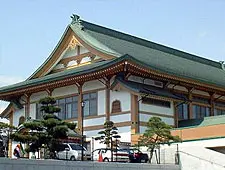
What is Baiin Zen Temple?
Belonging to the Myoshinji school of the Rinzai sect, the temple is said to have been founded in the Ashikaga period.
On the temple grounds, there are the graves of Shimizu Jirocho, the “ruffian of the Tokaido,” his aides Oomasa, Komasa, and Masukawa Sen'emon, and his wife Ocho, whom he loved throughout his life.
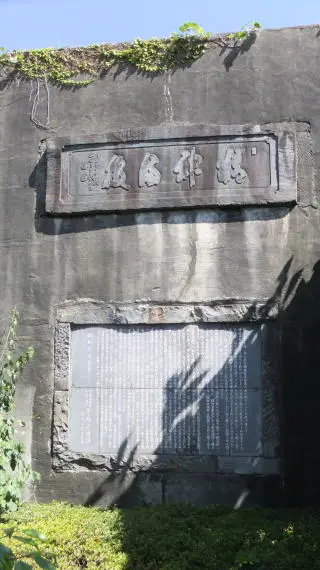
The “Tomb of Jirocho the Chivalrous” was written by Takeaki Enomoto, a former shogunate retainer who later served as Minister of Communications in the Meiji government.
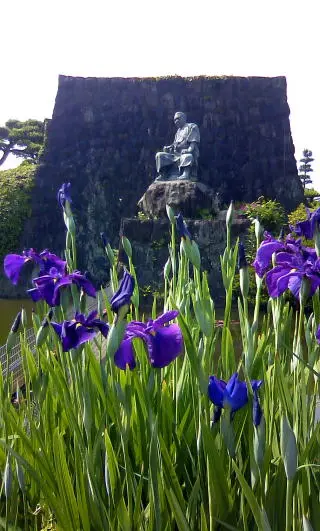
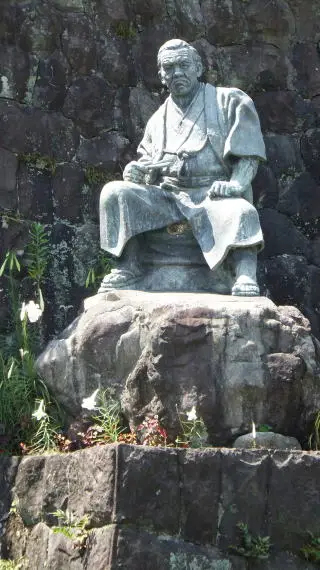
He was the only chivalrous person in Japan to have a bronze statue installed in recognition of his life’s service. The first bronze statue was given up for its metal during the Pacific War, and the current one was made by Tatsuo Tsutsumi in 1952.
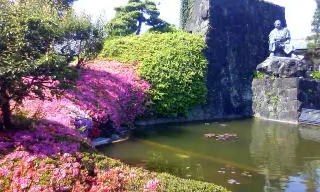
The stone wall behind the statue represents Sunpu Castle, and the pond in front represents Suruga Bay, which shows the spirit of Jirocho who put down roots in his hometown Shimizu.
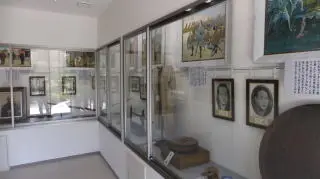
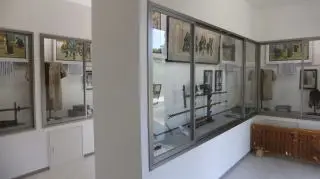
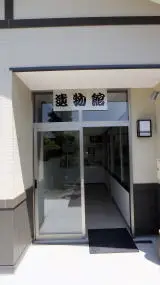
The Jirocho Museum displays relics such as a crystal ball presented by Katsuzo of Kurokoma, a Bishamonten amulet travel sword (dochuzashi), a clock, a telescope, and a matchlock gun.
The temple was founded in the first year of the Meio era (1492, in the Ashikaga period) by the monk Tenrin Domyo, a disciple of the monk Tokoku.
The temple was first named Baiin-an and became vermilion-seal land of the Takeda family during the Eiroku era; the old documents still survive today. It was later renamed Baiinji Temple.
In the Keicho era (1596–1615), the halls and treasures were destroyed by fire. The temple was later rebuilt, but all the halls collapsed in the Great Ansei Earthquake.
In the 36th year of Meiji (1903), the present main hall was rebuilt under the 14th head priest, Mankyu. (From materials for general visitors)
| Visiting Information | |
|---|---|
| Opening hours | 9:00 ~ 16:00 |
| Admission | Adults: 300 yen, Children: 150 yen |
| Groups of 30 people or more | Adults: 250 yen, Children: 120 yen |
| Visitors with disabilities | Adults: 150 yen, children: 80 yen |
About the Jirocho Museum
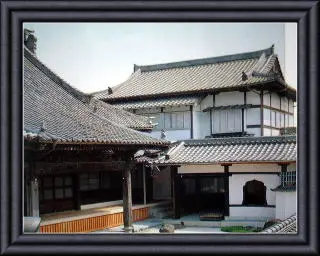
On April 27, 2012 (Heisei 24), the Jirocho Museum (Jirocho Archives) reopened with a new look.
With more exhibits on display, we are sure Jirocho fans will enjoy it.
Thanks to the huge success of the rokyoku (narrative ballads) of Hirosawa Torazo, Jirocho’s name became known throughout Japan, and many films and dramas were made, starting with “Jirocho Sangokushi.”
These works focused mainly on his world of chivalry, so many people fell for “Jirocho the man.”
In recent years, however, attention has turned to what Jirocho achieved from the age of 49 onward.
He worked tirelessly for the development of Shimizu, and in turn Shizuoka: improving Shimizu Port, opening an English school in connection with it, and taking part in oil field development and a light railway business.
Please stop by the museum and see this side of Jirocho.
Jirocho Museum
〒424-0932 3-8 Minamioka-cho, Shimizu-ku, Shizuoka-shi (inside Baiin Zen Temple)
Hours: 9:00~16:00
Contact: 054-352-0256 (Komatsuen)
Important notice
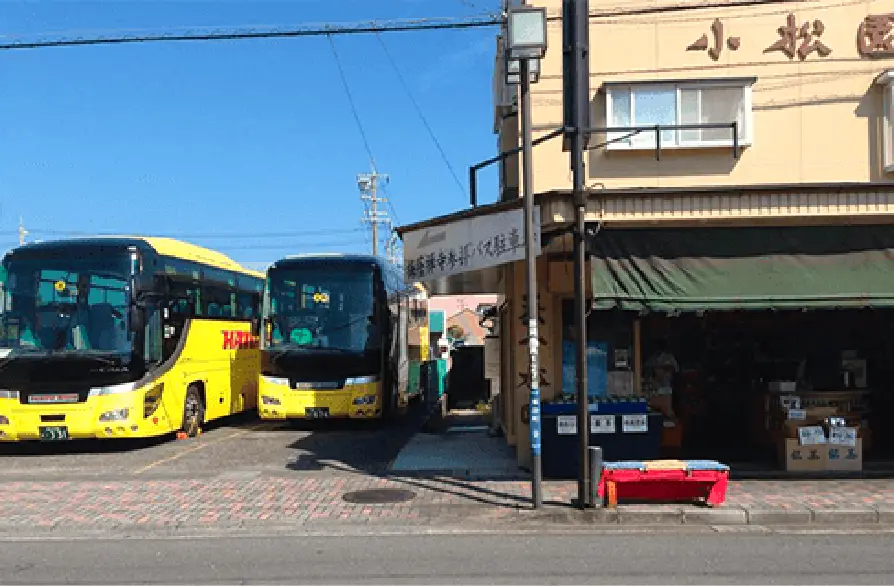
The Baiin Zen Temple shop has been temporarily closed since the end of the May holidays in 2024 (Reiwa 6).
Since 2008, Komatsuen had been entrusted by Baiin Zen Temple with receiving individual and group visitors, and ran this together with the shop.
Due to various circumstances, however, the museum and shop are temporarily closed. We will announce the reopening here, so please wait a little longer.
We apologize for the great inconvenience to visitors to the temple and thank you for your understanding.
Groups can still view the museum if they book in advance. Please contact us at the numbers below.
Komatsuen 054-352-0256 or Baiin Zen Temple 054-352-0995
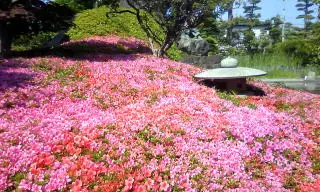
<Japanese garden>
<The newly renovated Jirocho Museum (Relic Hall)>
If you have any questions, please do not hesitate to contact us.